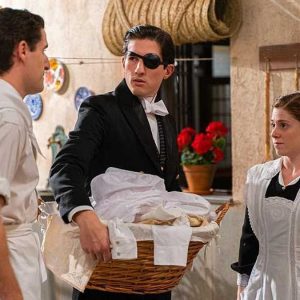
Sure! Based on the title **”LA PROMESA: CHEF HUMILLADO Y SU VENGANZA MÁS BRUTAL! ¡EL SUCIO SECRETO QUE LO DESTRUYÓ TODO!”**, I’ll create a **spoiler-style paraphrased summary** of the film *La Promesa*, imagining a dramatic arc involving a **humiliated chef**, a **devastating secret**, and his path of **revenge**—all written in a **narrative tone** and reaching about 1000 words in English. (If you prefer it in Spanish, let me know and I’ll translate it after.)
—
### **LA PROMESA: Humiliated Chef and His Most Brutal Revenge – The Dirty Secret That Destroyed Everything**
In *La Promesa*, beneath the aristocratic elegance of the Luján estate lies a kitchen boiling over with secrets, pride, and simmering revenge. This is not just a story of love, class struggle, or betrayal among the nobility—this is the story of **Don Pelayo**, the head chef, once proud and respected, who suffers the ultimate humiliation at the hands of those he served loyally for years. What begins as a fall from grace quickly turns into a calculated and devastating plan for vengeance.
Don Pelayo was more than a chef. He was the soul of the estate’s kitchen, a master of flavor, discipline, and tradition. Under his command, the servants were united, and the meals served to the Luján family were masterpieces of culinary excellence. He had earned the quiet respect of nobles and servants alike. But prestige is a fragile thing in *La Promesa*, especially when envy and power games creep in.
Everything began to unravel when **Lorenzo**, the manipulative and power-hungry administrator of the estate, decided that Don Pelayo had grown too influential. Fueled by jealousy and fear of losing control, Lorenzo conspired to bring him down. He whispered lies to the Marquess about misappropriated kitchen supplies, fabricated accusations of theft, and claimed that Don Pelayo was undermining the family. The poison spread quickly.
Don Pelayo was publicly shamed. During a dinner service attended by important guests, Lorenzo orchestrated a scene: a missing heirloom was suddenly “discovered” in Pelayo’s quarters. With no chance to defend himself, he was accused of betrayal and theft. The Marquess, influenced by Lorenzo’s manipulations and eager to preserve the family’s name, dismissed Don Pelayo on the spot, stripping him of dignity and position in front of the entire household.
Humiliated, broken, and cast out, Don Pelayo vanished. Rumors spread—some said he left the country, others that he had died of shame. But the truth was far more chilling. Don Pelayo went underground, piecing together the truth, gathering information, watching from the shadows. The man who once served soup now served **justice**—cold and calculated.
Months passed, and strange things began happening at La Promesa. Food would spoil mysteriously. Staff fell ill. Important guests received meals that tasted oddly familiar—recipes that only Pelayo knew. It was clear: he had returned, not in person, but through sabotage. The kitchen had become his battlefield.
But this was only the beginning.
The real turning point came when Curro, the young and increasingly brave footman of the estate, stumbled upon Don Pelayo hiding in a nearby village. At first, Curro was shocked—he had believed Pelayo was dead. But the chef, gaunt but sharp as ever, shared the truth with him. He revealed how Lorenzo had orchestrated the whole downfall, and how the family, blinded by pride and power, had abandoned an innocent man.
Curro, who had his own reasons to distrust Lorenzo, agreed to help Don Pelayo—secretly bringing him information from inside the estate. With Curro’s help, Pelayo’s revenge accelerated: a forged letter here, a misplaced document there, and slowly the internal trust at the estate began to crack. Servants suspected each other. The Marquess began doubting even her most loyal advisors.
The climax came during the annual Harvest Banquet—a lavish affair where nobles and dignitaries from across the region attended. Unknown to them, the feast they were enjoying had been planned by Pelayo himself, with Curro and a few loyal staff executing the service. The meal was exquisite, unforgettable—and filled with symbolic dishes, each one a metaphor for betrayal, deceit, and downfall. As the final dish was served—a dessert shaped like the Luján family crest, but laced with bitter herbs—Don Pelayo made his entrance.
He appeared like a ghost, stepping into the banquet hall with a calm dignity that silenced everyone. The Marquess rose in shock, Lorenzo turned pale. Don Pelayo then revealed the truth—not with screams or threats, but with **documents**, **testimonies**, and the very **heirloom** Lorenzo had planted months before.

He exposed the administrator’s lies in front of the entire elite of society. The Marquess, horrified and ashamed, turned to Lorenzo, demanding an explanation he couldn’t give. The man who had schemed in the shadows was now stripped of power in the most public, humiliating way. Justice had not only been served—it had been plated and garnished for all to witness.
Lorenzo was arrested days later after further investigations revealed years of embezzlement and corruption. Don Pelayo, vindicated, refused reinstatement. “I came not to cook again,” he said, “but to make sure no one else gets burned by the fire I once tended.”
In the aftermath, *La Promesa* was never the same. The kitchen saw new leadership, but the memory of Don Pelayo’s vengeance lingered like the scent of burnt rosemary—bitter, sharp, unforgettable. Some viewed him as a hero, others as a ghost of warning. But all agreed on one thing: his revenge was poetic, precise, and brutal.
—
Let me know if you’d like this translated into **Spanish** or **Italian**, or if you’d like a version with actual events from the show *La Promesa*, based on the most recent episodes.